


Free written scope consultation - allowances, timeline, and change-order rules on paper before a single trade is scheduled
Styles & brands we work with







See the difference
 Before
 After
After Before
 After
After Before
 After
AfterHow Much Does Kitchen Island Installation Cost in Miami?
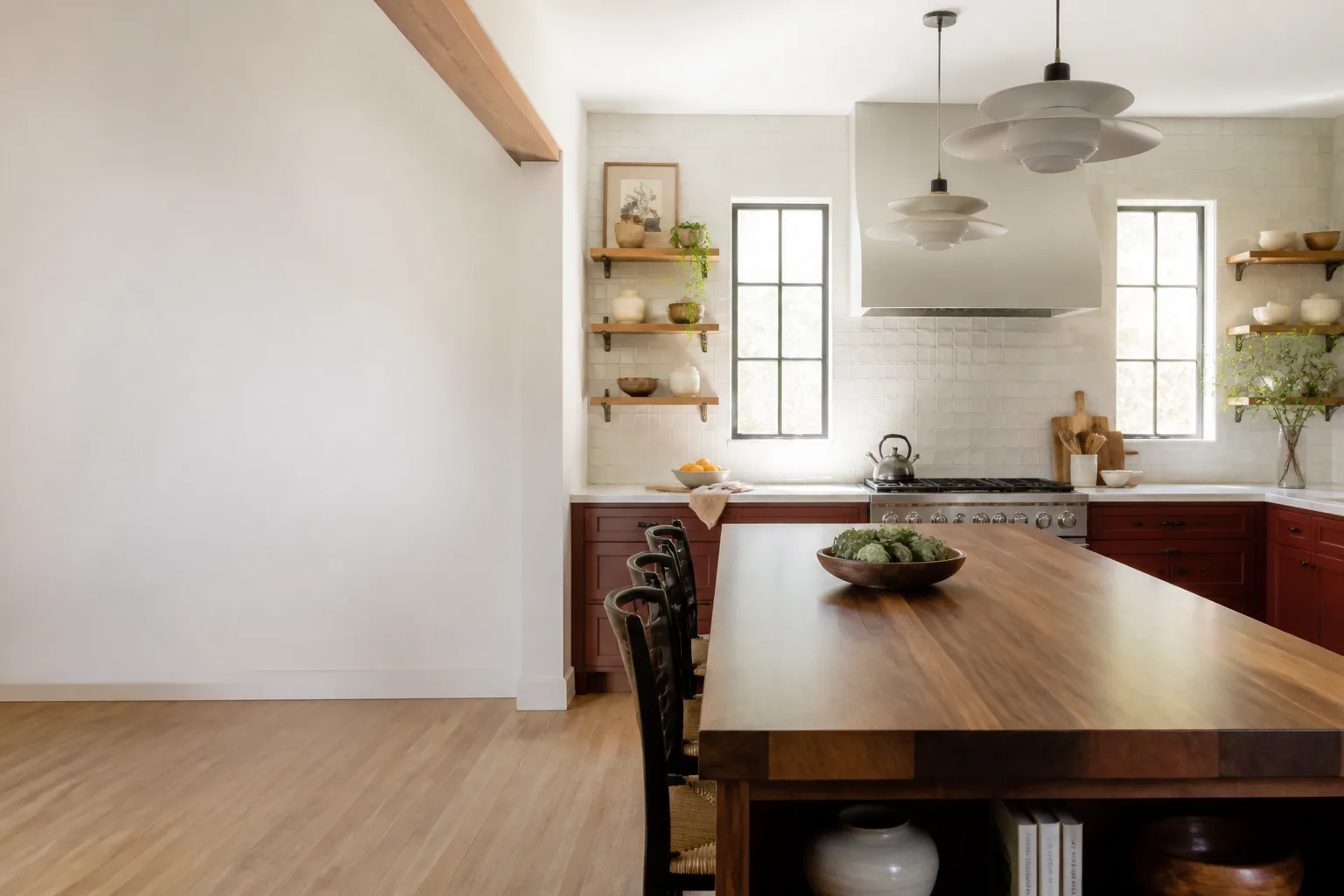
Kitchen island installation in Miami typically costs between $3,540 and $11,800, with most homeowners landing around $6,500 to $8,500 for a mid-size island with quartz or granite countertops, seating, and storage. That range assumes a licensed contractor doing the work, including plumbing or electrical tie-ins if you’re adding a sink, outlets, or pendant lighting. A basic prefabricated island with no utilities runs closer to the bottom of that range; a custom-built island with waterfall edges, exotic stone, and appliance integration climbs toward the top.
If you’re comparing quotes and one comes in under $3,000 for anything beyond a simple cabinet box, ask what’s missing. In Miami’s market, that number usually means the finisher isn’t licensed, the countertop is excluded, or the “installation” is really just assembly without permits or utility work. We’ll walk you through exactly where the money goes below.

Kitchen Island Installation Cost Breakdown (2026)
Here’s how a typical kitchen island project in Miami breaks down line by line. These are real ranges we see in Dade County pricing, not national averages adjusted for the Miami market:
| Line Item | Cost Range | Notes |
|---|---|---|
| Base cabinet or custom island box | $900 – $2,800 | Stock cabinetry sits at the low end; KraftMaid or Wellborn semi-custom runs higher. |
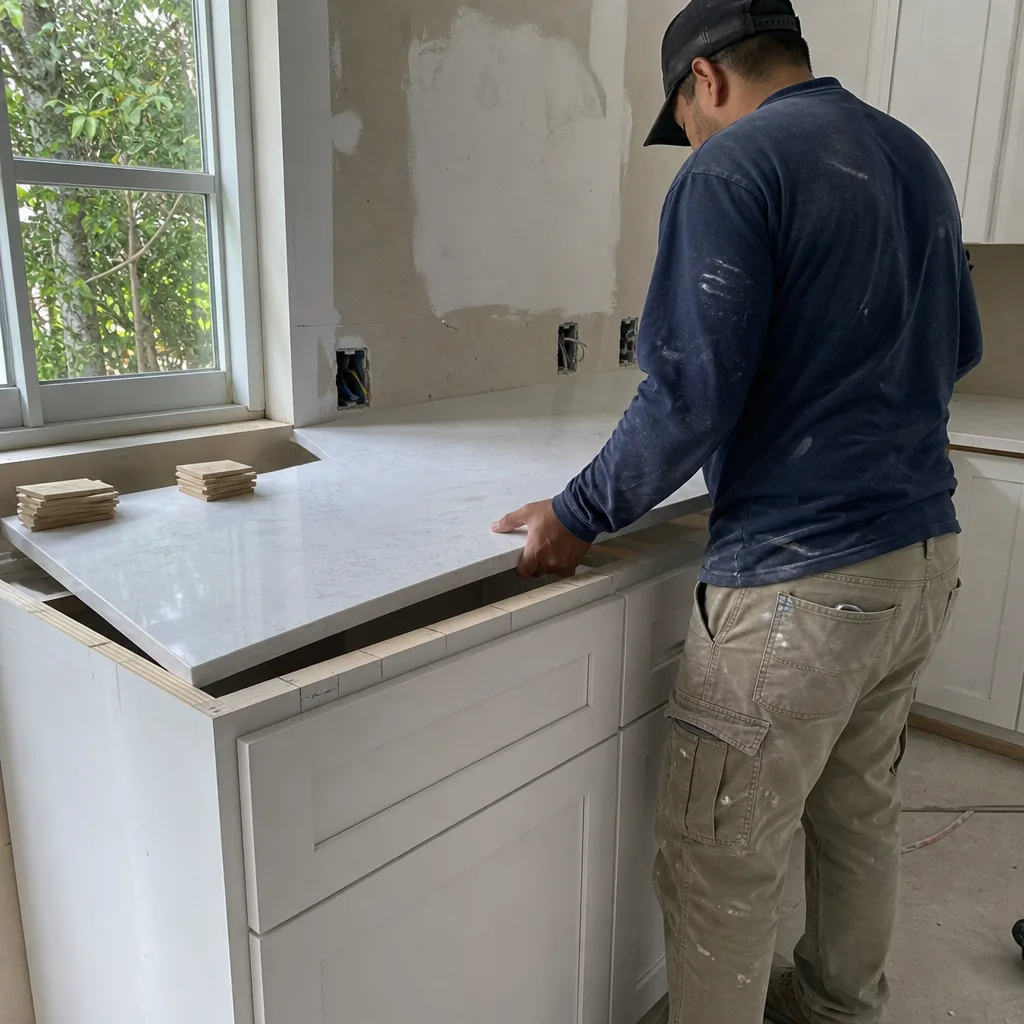
| Countertop material and fabrication | $1,200 – $4,500 | Laminate at the low end; Cambria, Silestone, or Caesarstone quartz at $75 – $140 per square foot installed. |
| Plumbing rough-in and hookup (sink or prep faucet) | $500 – $1,600 | More if you’re moving an existing drain line across a slab floor. |
| Electrical work (outlets, pendant lights, under-counter lighting) | $350 – $1,200 | Miami-Dade code requires GFCI protection within 6 feet of a sink. |
| Seating overhang support, corbels, or brackets | $150 – $600 | Stone overhangs beyond 12 inches need steel support or reinforced corbels. |
| Permits and inspection fees | $120 – $450 | City of Miami and unincorporated Dade County fees differ; electrical and plumbing each require separate permits. |
| Demo and haul-away (if replacing an existing island) | $200 – $650 | Stone and concrete removal adds weight and disposal costs. |
What moves the number most is whether you’re adding utilities. A purely decorative island (cabinets and countertop only) has no permit draw and no plumber on site. The moment you add a sink, a dishwasher drawer, or an outlet, Miami-Dade’s building code pulls you into permit territory, and that’s where projects gain $1,000 to $3,000 in legitimate, necessary costs. It’s not contractor padding. It’s the price of doing the work so it passes inspection and doesn’t flood your kitchen two years later.
What Affects Kitchen Island Installation Pricing in Miami
- Slab vs. raised foundation. Many Miami homes built before 1970 sit on concrete slabs. Moving a drain line for a sink in an island means cutting into the slab, which adds $800 to $2,500 to the job. Homes on raised foundations or with crawl spaces make plumbing moves dramatically cheaper.
- Countertop material and edge profile. A standard eased-edge granite top costs far less than a waterfall quartz edge, which doubles the fabricated square footage and requires book-matched slabs. Cambria and Silestone quartz run higher than granite in Miami, but they hold up better against humidity and citrus stains.
- Cabinet source: stock vs. semi-custom. A stock box from a big-box supplier starts around $300 to $600 for the island footprint. A KraftMaid or Wellborn island with roll-out trays, deep drawers, and a custom finish can push past $2,500 before the countertop is even templated.
- Seating and overhang support. If you want bar seating for three or four people, the countertop overhang needs to be 12 to 15 inches, which means steel brackets or corbels underneath. That’s a few hundred dollars in hardware and fabrication, and it has to be engineered correctly or the stone will crack along the unsupported edge.
- Appliance integration. A microwave drawer, beverage cooler, trash pull-out, or second dishwasher changes the cabinet layout and the electrical rough-in. Each appliance adds $150 to $500 in wiring or cabinetry modifications, plus the cost of the unit itself.
- Permit jurisdiction. The City of Miami, Coral Gables, Hialeah, and unincorporated Miami-Dade County all have slightly different fee schedules and inspection requirements. A project in Coral Gables may require additional zoning review that a house in Kendall does not. Your contractor should know which jurisdiction you’re in and price accordingly.

How to Save on Kitchen Island Installation
Saving money on an island isn’t about finding the cheapest bid. It’s about making choices that reduce labor and material costs without leaving you with something you’ll want to rip out in three years. Here’s what actually works:
- Skip the sink and keep it decorative. This is the single biggest cost lever. No plumbing, no permit for water lines, no slab cutting, no drain rerouting. You save $1,000 to $3,000 and the island still gives you prep space and seating.
- Choose a stock cabinet line with upgraded hardware. KraftMaid’s stock and entry semi-custom lines give you solid construction at a lower price than full custom built-ins. Spend a little more on soft-close hinges and drawer glides. The feel is what you’ll notice every day, not the label inside the door.
- Use a remnant slab for a smaller island. Miami stone yards often have leftover Cambria or Silestone slabs from larger jobs. If your island top is under 25 square feet, a remnant can save you 30 to 40 percent on material costs. The catch is you have to be flexible on color and pattern.
- Plan electrical early. If you’re doing any kitchen remodel anyway, wire the island while walls are open. Running a home run later, through finished drywall or across a slab, costs two or three times as much.
- Get a written price before work starts. This is where Penhallow Remodeling’s process actually protects your budget. We put the number in writing before we touch anything, so the figure you approve on day one is the figure on the invoice. No verbal ballpark that drifts upward after demo. Call (850) 988-7559 for a free estimate and we’ll price your exact island configuration, not a generic range.
One more note on timing. Miami’s rainy season runs May through October, and while interior work isn’t rain-delayed the way roofing is, slab cutting for plumbing can be affected by groundwater saturation in certain low-lying neighborhoods like Sweetwater or Westchester. If your island needs a drain line and you’re on a slab, scheduling during the drier months can shave a day or two off the timeline.
FAQ: Kitchen Island Installation Cost in Miami
How much does a kitchen island cost installed in Miami?
A kitchen island costs $3,540 to $11,800 installed in Miami, with the median project landing between $6,500 and $8,500. Décor-only islands without plumbing or electrical fall toward the bottom, while custom islands with sink hookups, quartz waterfall edges, and appliance integration run toward the top. Call (850) 988-7559 for a written quote on your specific configuration.
Is it cheaper to buy an island or have one built?
A prefabricated or stock island from a big-box store runs $800 to $2,500 for the base alone, but you’ll still pay $1,500 to $4,000 for professional installation, leveling, anchoring, and countertop templating. A semi-custom island from a contractor costs $3,540 to $11,800 all-in, and you get a written guarantee on the work. The prefab route is cheaper only if you can live without any utility connections and you’re comfortable with a visible seam where the island meets your floor.
How long does kitchen island installation take in Miami?
A decorative island with no utilities typically takes 2 to 4 days, including countertop templating and final stone installation. An island with plumbing and electrical takes 5 to 10 days, depending on permit approval times and whether slab cutting is required. Inspections add a day or two after work is complete. We’ll give you a defined arrival window before work starts, so you know exactly when our background-checked, uniformed technicians will be in your home.
Do I need a permit for a kitchen island in Miami-Dade County?
If you’re adding or moving plumbing, electrical outlets, or a gas line, yes. Miami-Dade County and the City of Miami both require permits for any utility modification, even inside an existing kitchen. A purely decorative island with no utilities does not typically require a permit, but if you’re adding seating that changes the kitchen’s clear floor space, check with your local building department. We handle permit applications for you and schedule all required inspections.
What countertop material is best for a kitchen island in Miami’s humid climate?
Quartz, specifically Cambria, Silestone, or Caesarstone, runs between $75 and $140 per square foot installed and is the most practical choice for Miami’s humidity. It’s non-porous, so it won’t absorb moisture or harbor bacteria the way unsealed granite can, and it doesn’t require annual resealing. Granite runs $50 to $110 per square foot and works well if sealed properly, but quartz holds up better against the citrus, coffee, and wine spills that are part of daily life in a Miami kitchen.
Written by Trevor Nash, Owner at Penhallow Remodeling Miami. Trevor leads every estimate and stands behind every installation with the 365-Day Done Right Promise: if it’s not done right, we make it right, backed in writing on every project.
Pricing reflects the Miami market as of 2026. Penhallow Remodeling Miami offers free estimates – call (850) 988-7559.
What Our Customers Say
"Redid two bathrooms at once. The crew protected the floors and cleaned up every single day before leaving. Quote was detailed and there were no mystery charges at the end."
- Tricia Dawson"Full home refresh before we sold. They were straight about what was worth doing and what wasn't to get our money back. On time, on budget, and it sold in a week."
- Monica Vaughn"Full kitchen down to the studs. The written estimate held and they finished on the day they promised. Crew was tidy and polite the whole month. Rare to find."
- Vernon Askew