

Free written scope consultation - allowances, timeline, and change-order rules on paper before a single trade is scheduled
James Hardie Kitchen Remodeling: The Miami Owner’s Guide
James Hardie kitchen remodeling in Miami typically runs $16,520 – $53,100 for a full kitchen project, depending on cabinet line, countertop material, and how much structural work the space needs. We stock and install the materials that work with James Hardie products on a regular basis, and we can usually start your project within two to three weeks of a signed agreement. Most Miami homeowners call us after discovering water damage behind a sink or seeing cabinet frames pulling away from a wall that was never properly prepared for Florida humidity.
What makes James Hardie different in a kitchen setting is the backing material. HardieBacker cement board is a substrate – the moisture-resistant layer behind your tile or stone – that handles Miami’s humidity better than drywall or plywood ever will. When it’s installed correctly, it holds up for decades. When it’s not, you get cracked grout, loose tile, and eventually rot. We’ve opened up walls in Coconut Grove where the HardieBacker was installed over a leaky sink cabinet with no vapor barrier, and the board itself was fine but the framing behind it was gone. That’s the kind of thing you only find out by looking.
Penhallow Remodeling Miami is an independent remodeling contractor. We’re not affiliated with James Hardie, but we install their products alongside recognized brands like KraftMaid cabinetry, Cambria and Silestone countertops, and Kohler and Moen fixtures. The products behind our guarantee are as solid as the promise itself.
Which James Hardie Models This Applies To
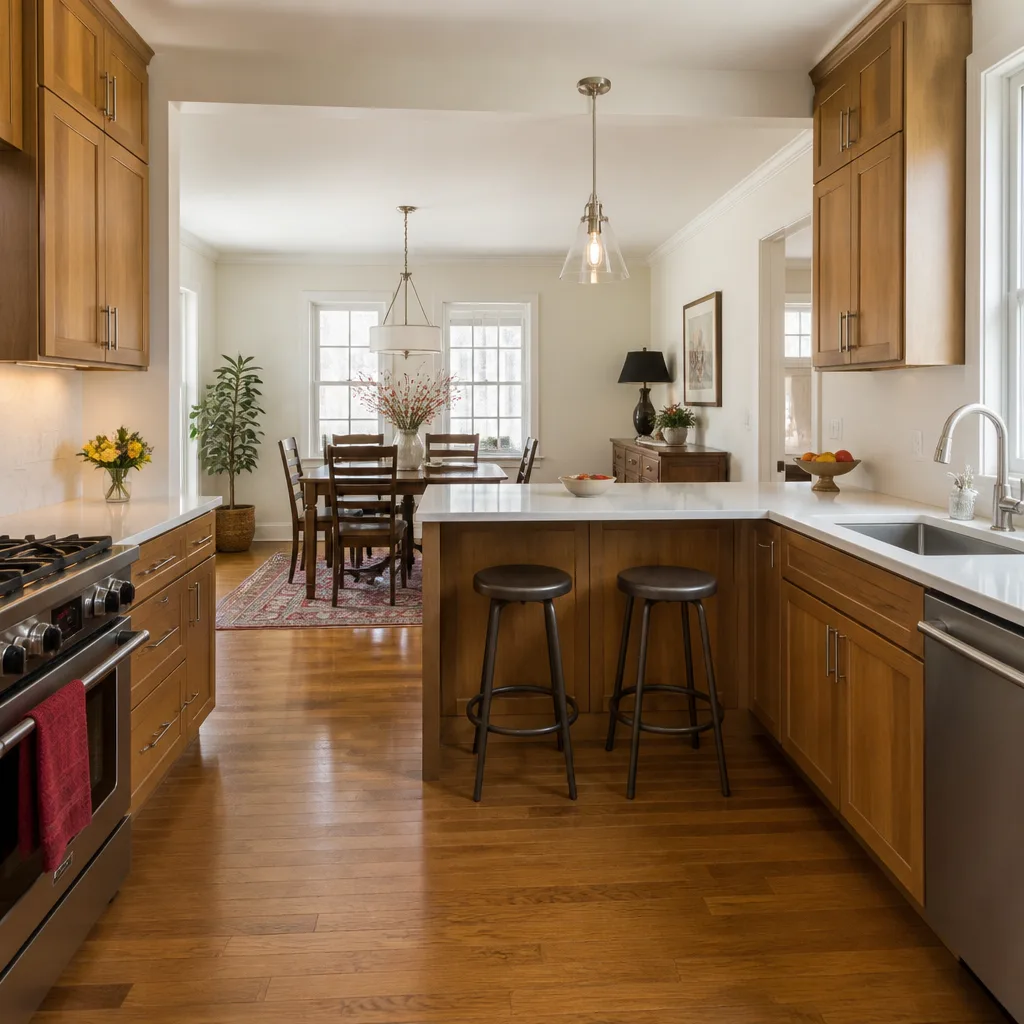
In a kitchen, the James Hardie product you’re most likely dealing with is HardieBacker 500 cement board, which comes in quarter-inch and half-inch thicknesses. The quarter-inch board is for floors and countertops meant to receive tile. The half-inch board is for walls, though we sometimes use it on floors in older Miami homes where the subfloor has too much flex. The panels are 3 feet by 5 feet, which matters when you’re trying to figure out whether someone installed it right – if you see seams landing in the middle of a stud bay with no support, that’s a problem.
The compatibility gotcha most homeowners don’t know: HardieBacker is not waterproof. It’s water-resistant, which means it won’t fall apart when wet, but water still passes through it. In a Miami kitchen, any HardieBacker installation behind a sink or in a splash zone needs a waterproof membrane or it’s just a matter of time before water finds the framing. For an OEM versus aftermarket decision, James Hardie’s board is specifically engineered for tile adhesion and dimensional stability in high-humidity environments. Generic cement boards from other manufacturers are often thinner, crumble more at the edges, and don’t hold screws as consistently in our experience. We stock James Hardie board on our trucks for kitchen work as a matter of course.
Styles & brands we work with







Signs Your James Hardie Kitchen Remodeling Is Failing
- Cracked grout lines along the countertop backsplash. This usually means the HardieBacker underneath was installed without enough mechanical fasteners, so the board flexes slightly every time someone leans on the counter, and the grout is the first thing to give.
- Tiles sound hollow when you tap them. A properly bonded tile on HardieBacker sounds solid, almost dull. A hollow sound means the thinset mortar failed to bond, often because the board wasn’t primed or was installed dirty from drywall dust.
- Soft spots in the cabinet toe-kick or base. Water from a slow sink leak has been wicking into the cabinet base and the subfloor. The HardieBacker on the countertop may look fine, but the structure below is rotting.
- Musty smell that won’t go away even after cleaning. In Miami’s climate, trapped moisture behind a backsplash or under a countertop grows mold fast. A persistent odor is water where it shouldn’t be.
- Bulging or warped cabinet panels near the sink. This is water damage to the cabinet itself, and it usually means the waterproofing details around the sink got skipped or failed. By the time you see warping, there’s already been weeks or months of moisture exposure.
See the difference
 Before
 After
After Before
 After
After Before
 After
AfterReplacement Cost & What’s Included
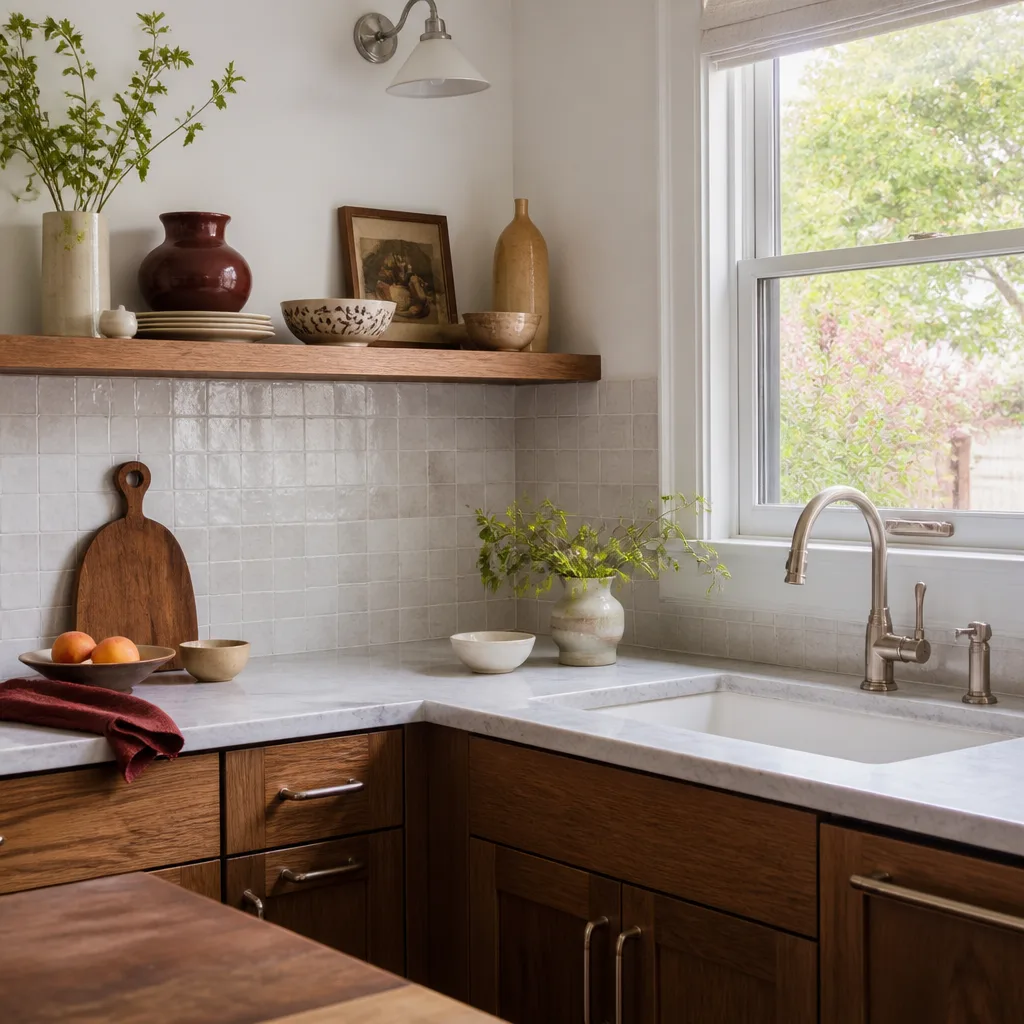
A full James Hardie kitchen remodeling project in Miami runs $16,520 – $53,100. The range breaks down by scope: a small kitchen with stock cabinetry and laminate counters lands on the lower end, while a full-gut remodel with custom cabinets, Cambria or Silestone quartz countertops, and HardieBacker throughout the wet zones pushes toward the top. Backsplash installation alone runs $945 – $2,950, and countertop installation runs $2,360 – $7,670 depending on material and square footage.
Every quote includes the same thing: a written price before any work starts, a defined arrival window, a clean job site at the end of every day, and our 365-Day Done Right Promise in writing. That promise means if anything we installed fails inside a year, we come back and fix it at no charge. No service call fee, no re-inspection fee, no arguing about whose fault it was. The number on day one is the number on the invoice.
DIY or Call Us?
There are some things you can check on your own. Look for cracked grout, soft cabinet bases, and any signs of water staining around the sink. You can run your hand along the wall behind the faucet to feel for bulging or dampness. None of that requires tools or experience.
What you shouldn’t do is start pulling tile off the wall to see what’s behind it. Once you break the water-resistant layer, you’ve committed to a repair, and a partial DIY fix on HardieBacker often leaves a seam that fails within six months. If water has already reached the framing, you’re not doing a tile repair anymore – you’re doing structural work. Trevor Nash has been straight with Miami homeowners about this for years: give you a number first, then pick up the tools. Call (850) 988-7559 and we’ll come out, diagnose what’s actually happening, and give you a written estimate before anything gets pulled apart.
FAQs
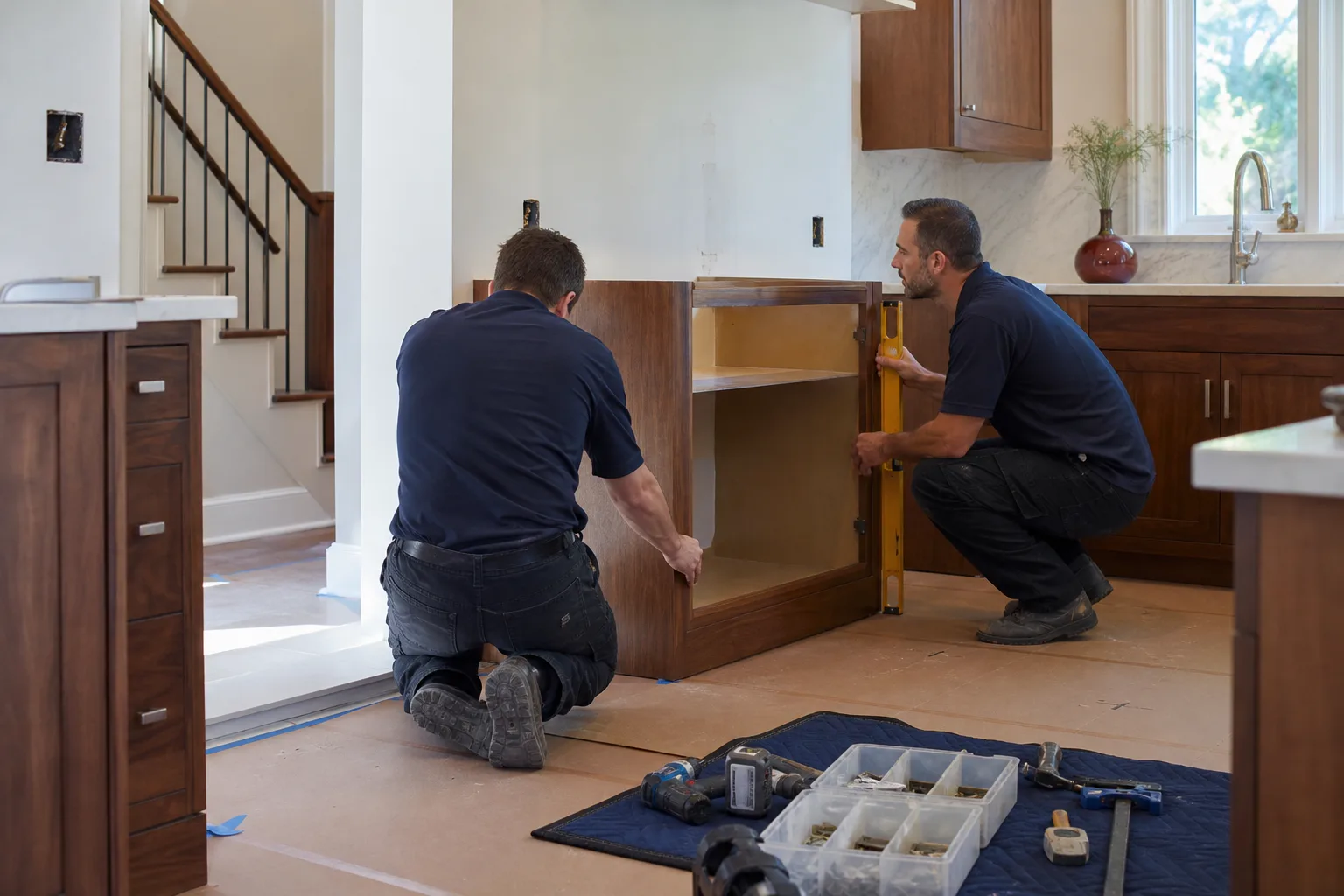
A properly installed James Hardie kitchen installation should last 25 to 40 years, but the weak point in Miami is always the waterproofing details around the sink and the seam taping. The board itself won’t rot, but the framing behind it will if water gets through. Call (850) 988-7559 for an exact assessment of your kitchen – estimates are free.
In many cases, yes. If the failure is isolated – cracked grout, a few loose tiles, a small section of failed board behind the sink – we can cut out and replace just that section, re-tape the seams, and re-tile. What we won’t do is patch over rot or water damage. If the framing is compromised, that has to be replaced first for the repair to hold. Call us for an honest read on what you’re facing.
A full James Hardie kitchen remodel in Miami typically takes three to six weeks depending on scope, cabinet lead times, and whether we find hidden damage once the walls are open. We give you a written timeline before work starts and a defined arrival window for every day we’re on site.
Yes. We stock HardieBacker board in both quarter-inch and half-inch thicknesses, seam tape, and the correct fasteners on our trucks for kitchen projects. We also carry materials from KraftMaid, Cambria, and Silestone for the surrounding scope. If a kitchen repair needs a specific product we don’t have on hand, we source it from the same trade suppliers we’ve used for years, which means no mystery material from a big-box shelf.
Written by Trevor Nash, Owner, Penhallow Remodeling Miami at Penhallow Remodeling Miami, serving Miami and nearby areas.


