

Last updated October 15, 2026






Free written scope consultation - allowances, timeline, and change-order rules on paper before a single trade is scheduled
Construction Cost Breakdown: The Miami Homeowner’s Reference for 2026
The national conversation about remodeling costs is built on numbers that have almost nothing to do with building in South Florida. When a magazine quotes $27,000 for a kitchen remodel, that figure assumes Midwest labor rates, standard drywall, and fasteners that would not pass a Miami-Dade inspection. We wrote this guide because homeowners in Miami deserve a cost reference that reflects what actually happens when you pull a permit here; for more on that process, see our guide to Construction Permits, Codes & Inspections in FL: What You Need to Know: the wind-load calculations, the HVHZ product approvals, the licensed subcontractor requirements, and the labor market that exists between Homestead and Aventura. By the time you finish reading, you will know where Miami adds cost over national averages, how to read a bid without an interpreter, and what separates a written price you can hold from a verbal estimate that evaporates at the first change order.
Quick Answer
Construction costs in Miami in 2026 run 25% to 40% above national averages for the same visible finishes, driven mainly by HVHZ-rated materials, impact window and door specifications, licensed subcontractor wage floors, and permit fees that are among the highest in Florida. A mid-range kitchen remodel in Miami typically lands between $30,000 and $65,000, a bathroom between $14,000 and $35,000, and whole-home renovations between $90 and $220 per square foot depending on structural scope. The number on a Miami bid is not inflated markup; it is the cost of building to code in a hurricane zone, and a homeowner who understands that can compare bids on equal footing-our DIY vs Professional Construction: The Miami Homeowner’s Decision Guide explores when professional expertise matters most-instead of chasing a low number that will not survive the permit office.
Styles & brands we work with







Table of Contents
- Where Miami Adds Cost Over National Averages
- Labor Cost Ranges by Trade in Miami, 2026
- Permit Fees and Plan Review: What the City Charges
- How to Read a Contractor’s Cost Breakdown
- The Real Cost of Change Orders in Miami
- What to Look For in a Contract Before You Sign
- Cost Ranges by Project Type: Kitchen, Bath, Whole-Home
- Common Mistakes to Avoid
- When to Call a Professional
- Frequently Asked Questions
Where Miami Adds Cost Over National Averages
Miami sits inside the High Velocity Hurricane Zone, a designation that applies to Miami-Dade and Broward counties and changes nearly every material specification on a remodeling job. The HVHZ building code requires impact-rated windows or approved shutter systems, roof coverings tested to withstand 150-plus mph wind speeds, and fasteners, straps, and connectors that tie the structure together against uplift. None of that shows up in a photo of a finished kitchen, but all of it shows up in the invoice. A standard double-pane window that costs $350 in Atlanta becomes an impact-rated Miami-Dade approved unit at $700 to $1,100, and the installation labor rises with it because the anchoring requirements are denser.
Then there is the moisture profile of the region. Miami’s humidity and rainfall mean exterior walls need moisture barriers and drainage planes specified for a climate where air conditioning runs ten months a year and the dew point sits near the surface of every assembly. Inside a bathroom, that translates to cement board substrate (the moisture-resistant layer behind your tile) instead of green drywall, and waterproofing membranes at every wet zone. In a kitchen, it means cabinet materials and finishes selected for resistance to humidity cycling. These are not upgrades; they are what prevent the exact failures that homeowners call us about after a cheaper remodel goes wrong.
Permit fees in Miami add another layer that national cost guides ignore. The city of Miami and Miami-Dade County both assess building permit fees, plan review fees, and in some cases impact fees, and a permit for a kitchen or bath remodel routinely runs between $800 and $2,500 before the first inspection. Some jobs also trigger a requirement for a registered design professional to sign off on structural changes, which adds $500 to $3,000 depending on scope. A national estimate will not account for any of this.
Labor Cost Ranges by Trade in Miami, 2026
The most useful thing you can carry into a bid review is a realistic sense of what each trade charges in Miami. These are the ranges we see on active bids in 2026, and they assume licensed, insured subcontractors working under a general contractor’s supervision:
- General contractor / project management: 12% to 20% of total project cost. This covers scheduling, trade coordination, permit management, and site supervision. Below 10%, ask what is actually being managed.
- Demolition and hauling: $4 to $8 per square foot for interior demo. Miami’s disposal fees for construction debris run higher than many markets because landfill distance and transfer station costs are baked in.
- Rough and finish carpentry: $65 to $110 per hour. Framing for structural changes costs more than trim work, and HVHZ strapping requirements add time to any wall that carries load.
- Tile installation: $8 to $18 per square foot for standard formats, $15 to $30 for large-format or intricate patterns. Waterproofing prep is a separate line item and a mandatory one in wet zones.
- Plumbing: $90 to $160 per hour, plus fixtures. Moving a drain line or vent stack can add $1,500 to $4,000 to a bathroom remodel in Miami because slab foundations or older cast-iron stacks demand more invasive work.
- Electrical: $85 to $150 per hour. Upgrading a panel to handle modern kitchen loads typically runs $2,800 to $5,500, and Miami’s older housing stock often requires exactly that.
- HVAC: $95 to $160 per hour. Any remodel that opens walls is a chance to correct duct sizing, and in Miami the system has to handle humidity load, not just temperature.
These are labor-only ranges. Fixtures, cabinetry, countertops, and finishes land on top of them, and those material choices swing the final number more than any hourly rate. If a bid shows labor far below these bands, the contractor is either paying unlicensed workers (Construction Warning Signs: A Miami Homeowner’s Reference Guide covers other red flags) or planning to make it up in materials markup or change orders later.
Permit Fees and Plan Review: What the City Charges
Permitting in Miami is a cost center most national cost guides simply do not model. The city of Miami operates its own building department, and unincorporated Miami-Dade has a separate process; both charge fees that scale with project valuation. Here is how the line items typically break down on a mid-range remodel:
- Building permit fee: Based on the declared valuation of the work, usually $400 to $2,000 for a kitchen or bath remodel. Underdeclaring valuation to save on fees is a bad idea; the inspector will catch it, and the adjustment lands mid-project.
- Plan review fee: A percentage of the permit fee, often 35% to 50%. If your project requires stamped drawings (structural changes, load-bearing wall removal, window enlargements), the design professional’s fee sits on top of this.
- Specialty trade permits: Electrical, plumbing, and mechanical permits are separate from the building permit and typically run $150 to $500 each in Miami. A full kitchen remodel will carry all three.
- Inspections: Miami requires rough-in inspections (framing, electrical, plumbing) before walls close and final inspections before sign-off. Most permits include a standard number of inspections; re-inspections after a failure cost $100 to $250 per visit.
- Impact, school, and other fees: Depending on location and scope, some projects trigger county impact fees or school concurrency fees. These are uncommon on interior remodels but worth asking about on additions or garage conversions.
The practical takeaway: a Miami remodel that would cost $25,000 in materials and labor will carry $1,500 to $4,000 in permit, plan review, and inspection costs before a hammer swings. A written bid that accounts for these up front is honest; one that omits them and “handles permits later” is building the change order into the back half of the job.
How to Read a Contractor’s Cost Breakdown
Most bids have three buckets: labor, materials, and overhead with profit. The ratios between them tell you more than the bottom-line number ever will. Here is a sane framework for a Miami remodel:
- Labor at 40% to 55% of total: This is the healthy band for a remodel with real trade labor. Below 40%, the contractor is either underbidding labor (which they will recover later) or cutting corners on who shows up.
- Materials at 30% to 45% of total: This shifts based on finish level. A kitchen with stock cabinets and laminate counters sits at the low end; a kitchen with Cambria quartz and Wellborn cabinetry sits at the top. If materials appear suspiciously low relative to what you selected, ask for a line-item spec sheet.
- Overhead and profit at 15% to 25%: This pays for the contractor’s insurance, vehicles, office staff, and the profit that keeps them in business. It is a legitimate line item. Zero overhead on a bid means the contractor is paying for project costs out of another job’s progress payments, and that is a warning sign.
When one category looks wrong, do not ignore it. A bid with labor at 25% and materials at 60% is often hiding a materials markup scheme. A bid with overhead at 40% is a contractor pricing for liability they expect to absorb. And a bid with no line items at all, just a single number and a signature line, is not a bid; it is a starting position for negotiation you did not agree to.
In our experience working with Miami homeowners, the bids that cause the fewest surprises are the ones that show every trade as its own line, every material allowance as a real brand and product line, and a permit fee that matches what the city actually charges. That level of detail takes longer to produce, which is why it is the exception rather than the rule.
The Real Cost of Change Orders in Miami
A change order is what happens when the scope shifts after the contract is signed: you decide to move the sink, the inspector requires a strapping detail the original drawings missed, or the wall you thought was non-load-bearing turns out to be structural. In Miami, small changes carry outsized costs because our building code treats many of them as re-permitting events. Here is what a “small change” actually costs:
- Moving a plumbing fixture: If the new sink location changes the drain, vent, or supply routing, the plumbing permit may need an amendment. Plan review fees, a new inspection, and the added labor typically run $800 to $2,000.
- Changing a window or door specification: Every window and exterior door in Miami must be HVHZ-approved for the specific size and installation. Swap a window during the build and the replacement has to match the approved product listing, which can mean reordering with a 6-to-10-week lead time and paying a premium for a non-stock size.
- Discovering hidden conditions: Open a wall in a 1950s Miami house and you may find corroded cast-iron drain lines, termite damage, or wiring that predates ground fault protection. Bringing those to code is not optional; it is required before the wall closes. Remediation commonly runs $1,500 to $6,000 depending on what you find.
- Finish changes after materials are ordered: If the tile is cut and the cabinets are in production, switching materials means paying for the original order’s restocking fee plus the new order’s lead time. In a market where Cambria slabs are cut to template, changing countertops after fabrication is close to a full material loss.
The defense against change-order whiplash is a contract that defines how change orders are priced before work starts. Ours says, plainly, that any scope change triggers a written change order with a price, a signed approval, and no work until you sign it. That is the only structure that prevents a $4,000 surprise from showing up on the final invoice without your knowledge.
What to Look For in a Contract Before You Sign
The gap between the cheapest written bid and the cheapest completed job exists because some contracts are built to absorb scope creep without your written consent, and others are built to prevent it. In Miami, where permit costs and HVHZ requirements add fixed overhead to every job, a contract that is vague on scope is a contract that will grow. Here is what to look for:
- Written price with clear scope lines: The contract should state what is included, what is excluded, and what the allowances cover. “Allowance for tile” without a dollar figure is a blank check.
- Permit and inspection language: The contract should name who pulls permits, who pays for them, and who schedules inspections. If it says the homeowner handles permitting, you should understand exactly what that means in Miami’s system.
- Change order procedure: Every change should require a written change order signed before work proceeds. No verbal approvals, no “we’ll figure it out at the end.”
- Payment schedule tied to milestones: Progress payments should track visible milestones (demo complete, rough-in passed, cabinets installed), not calendar dates. A contractor who wants 50% before any work starts is financing their other jobs with your deposit.
- Warranty terms in writing: What happens if something fails after the final inspection? The 365-Day Done Right Promise is the standard we operate under: if the work fails inside the guarantee period, we come back and fix it at no charge, and that promise is written into every contract and every job file.
- Lien release language: In Florida, subcontractors and suppliers can file liens against your property if they are not paid, even if you paid the general contractor. The contract should state that lien releases are required from every trade and supplier before final payment is released.
A contract that has these six elements is not cheap to produce, which is why it comes from a company that expects to do the work properly. A contract that lacks them is cheaper to write and far more expensive to live with. If you are pricing a remodel through a general contractor in Miami, the contract terms deserve as much scrutiny as the price.
Cost Ranges by Project Type: Kitchen, Bath, Whole-Home
Here are the ranges we see on our own bids and on the bids Miami homeowners bring us for review. These assume licensed trades, proper permitting, and mid-range finishes from recognized brands; entry-level and luxury work will fall outside them.
Kitchen Remodel
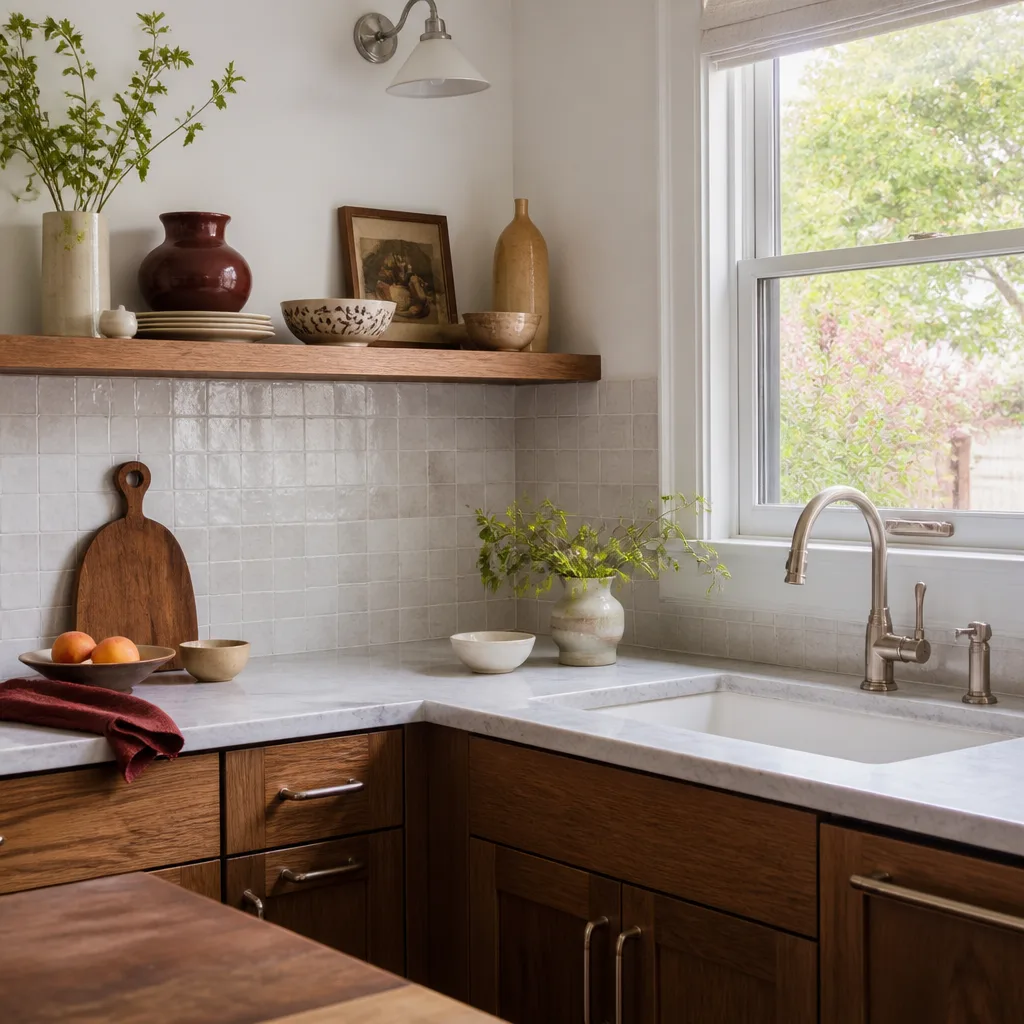
A full kitchen remodel in Miami runs $30,000 to $65,000 for most homes. That includes cabinet replacement (KraftMaid or Wellborn as mid-range standards), quartz or solid-surface countertops such as Cambria or Caesarstone, new fixtures from Moen or Kohler, tile or LVT flooring, and the electrical and plumbing work required to bring the room to code. The single biggest variable is whether you move plumbing or walls; keeping the sink and range in place saves $4,000 to $10,000 over a layout change. See kitchen remodeling in Miami for a deeper look.
Bathroom Remodel
A standard full bath remodel in Miami lands between $14,000 and $35,000. A gut-and-replace with new tile, a new vanity, a new toilet and tub or shower, and new fixtures sits at the lower end; moving the drain lines, converting a tub to a walk-in shower with frameless glass, or addressing water damage found during demo pushes toward the top and beyond. The waterproofing system (cement board, membrane, and flood testing) is a line item that adds $1,200 to $3,000 over a drywall-and-paint job, and it is the piece that determines whether the shower fails in year one or year twenty. See bathroom remodeling in Miami for detailed scopes.
Whole-Home Remodel
Whole-home renovation costs in Miami run $90 to $220 per square foot depending on whether you are refreshing finishes or restructuring the floor plan. A 2,000-square-foot home at $150 per square foot is a $300,000 project, and the range exists because structural work, window replacement, and mechanical system upgrades all pull the number up in large increments. Homes built before the current HVHZ code often need roof strapping upgrades and impact window retrofits just to open the walls legally, and those items alone can run $25,000 to $80,000 depending on the house.
Where Brand Choices Move the Number
Materials from recognized trade brands carry real cost and real protection. A Cambria quartz countertop includes its own lifetime warranty alongside ours; a Kohler or Moen fixture carries a manufacturer’s replacement guarantee; James Hardie siding is engineered for coastal humidity in a way that generic fiber cement is not. These products cost more than the box-store equivalent, and they hold up longer in Miami’s climate. When a bid shows a materials allowance, ask which brands are actually specified. An allowance that says “cabinets: $8,000” without a manufacturer is an invitation to install whatever is in stock at the supplier that week.
Common Mistakes to Avoid
- Comparing bids on bottom line alone. Two Miami kitchen bids at $38,000 and $46,000 may not be bids for the same kitchen. The first may exclude permits, impact-rated window replacements, or waterproofing; the second may include them. Read the scope, not the total.
- Skipping the contractor’s license verification. Florida requires a state license for any construction work over a small threshold, and Miami’s unlicensed contractor problem is real. A bid that is 30% under market is often a signal of no license, no insurance, and no recourse when something fails.
- Accepting a verbal price. If it is not written, it does not exist. The Kingswell standard we operate under says the price goes in writing before any work starts, so the number on day one is the number on the invoice. No legitimate contractor can offer less.
- Paying large deposits before work begins. Florida law caps deposits for residential work at 10% of the contract price for most projects. A contractor asking for 40% up front is either uninformed about Florida law or planning to use your money on another job.
- Ignoring the permit line. Some Miami homeowners skip permits to save money, and some contractors encourage it. The problem arrives when you sell the house and the unpermitted work surfaces in the inspection, or when the work fails and your insurance company denies the claim because the work was never approved. Pay for the permit.
- Choosing finishes with no Miami climate context. Solid wood cabinet doors, low-grade laminate, and untreated steel fixtures all fail faster in South Florida’s humidity than they do elsewhere. Products engineered for coastal environments cost more up front and avoid the callback that costs more later.
When to Call a Professional
Some costs are worth paying a professional to estimate, and construction in Miami is one of them. If you are planning a project that touches load-bearing walls, plumbing drainage, electrical panels, or any exterior opening, a licensed contractor’s written quote is the most valuable document you will receive. The building code here is too specific, and the cost of a mistake too high, to price by national averages or online square-foot calculators. We offer free estimates to Miami homeowners, which means you can get a written number on your specific project without paying for the privilege. Penhallow Remodeling Miami offers free estimates in Miami – call (850) 988-7559 and ask for Trevor.
Frequently Asked Questions
A full kitchen remodel in Miami typically costs $30,000 to $65,000, with the range driven by whether you move plumbing or walls, which cabinet and countertop lines you select, and what the home’s existing electrical and plumbing systems require to come to code. Cabinets and countertops are usually 40% to 50% of the total. Call (850) 988-7559 for an exact quote on your kitchen; estimates are free and written.
Miami sits in the High Velocity Hurricane Zone, which requires impact-rated windows and doors, wind-load-rated fasteners and connectors, and moisture management systems that are not required in most of the country. On top of code costs, Miami’s permit fees, licensed subcontractor wage rates, and construction debris disposal costs all run above national averages. The difference is not markup; it is the cost of building to a stricter standard.
Permit and plan review fees for a kitchen or bath remodel in Miami usually run $1,500 to $4,000 when you include the building permit, plan review, and separate electrical, plumbing, and mechanical permits. Structural changes that require stamped drawings add design professional fees of $500 to $3,000. A proper contract will show these costs as their own line item.
A contractor’s cost breakdown should show labor, materials, and overhead as separate line items, with each trade’s labor listed individually and each material allowance tied to a real brand and product line. The breakdown should also include the permit fee as a named cost. If the bid is one number with no supporting detail, the detail will arrive later as change orders.
The price should not change unless the scope changes, and any scope change should come as a written change order with a specific price that you sign before work proceeds. At Penhallow, the written price you receive before work starts is the number on the invoice, and the 365-Day Done Right Promise covers the work for a full year after completion. Call (850) 988-7559 to talk through your project.
A standard kitchen remodel runs 6 to 12 weeks from demo to final inspection, and a bathroom runs 4 to 8 weeks, depending on permit processing time, material lead times, and what the walls reveal when they open. Impact-rated windows and specialty finishes can extend lead times. The schedule should be written into the contract as part of the scope.
Recognized trade brands such as Cambria, Kohler, Moen, and James Hardie cost more than generic alternatives, and most carry manufacturer warranties that sit alongside the contractor’s own workmanship guarantee. When a product carries a lifetime warranty from the manufacturer and the installer guarantees the labor for a year in writing, the layers of protection are straightforward. The alternative is saving money on materials that carry no warranty from anyone.
The Bottom Line

Miami construction costs in 2026 are higher than national averages for reasons that are written into the building code, the permit fee schedule, and the labor market. A homeowner who reads a bid with those realities in mind stops comparing bottom lines and starts comparing scopes, and that is the single most valuable shift in judgment you can make before a remodel. The right question is not “why is this bid so high” but “what is in this bid that the other one left out” – and the answer almost always involves permits, waterproofing, HVHZ-rated openings, or the contractor’s willingness to put a price and a guarantee in writing. We are happy to walk you through it. Penhallow Remodeling Miami serves homeowners across Miami with written, guaranteed pricing on kitchens, bathrooms, and whole-home remodels, and we will give you a real number before any work starts.
Written by Trevor Nash, Owner at Penhallow Remodeling Miami, serving Miami since 2004. Explore more guides & resources.
See the difference
 Before
 After
After Before
 After
After Before
 After
After

